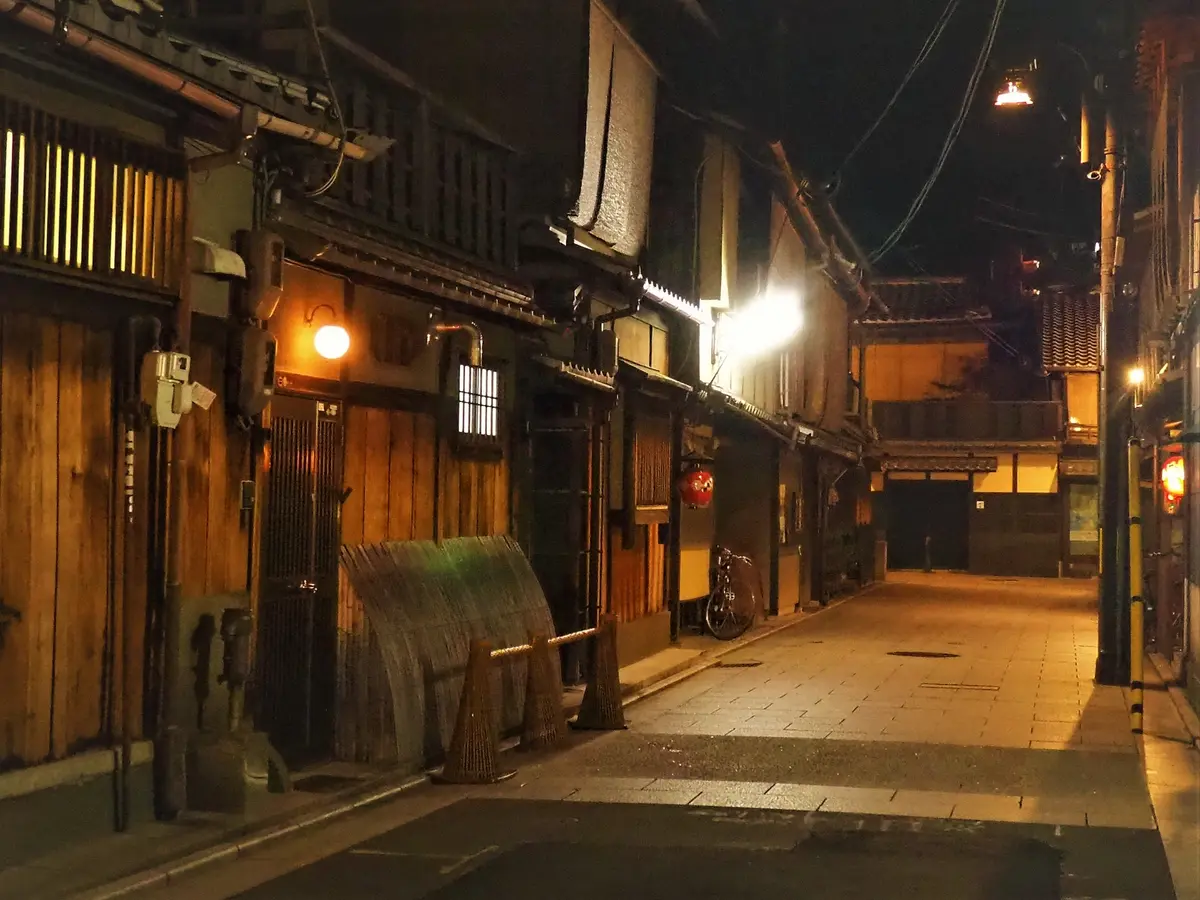
A geisha district of lattice teahouses
Gion grew up as the town in front of Yasaka Shrine, once called Gion-sha, and became Kyoto's best-known district of teahouses where geiko, Kyoto's geisha, entertain guests. Cool off with kuzukiri at a sweet shop open since the 1700s, then walk the stone-paved streets and the cherry-lined Shirakawa canal.
A sweet shop founded in the early 1700s. In the tearoom at the back, try kuzukiri: clear, chewy noodles made from kudzu starch, dipped in syrup.
The main street of Gion, lined with wooden teahouses and restaurants behind lattice fronts. The stone-paved side lanes are private, and locals ask visitors not to take photos there.
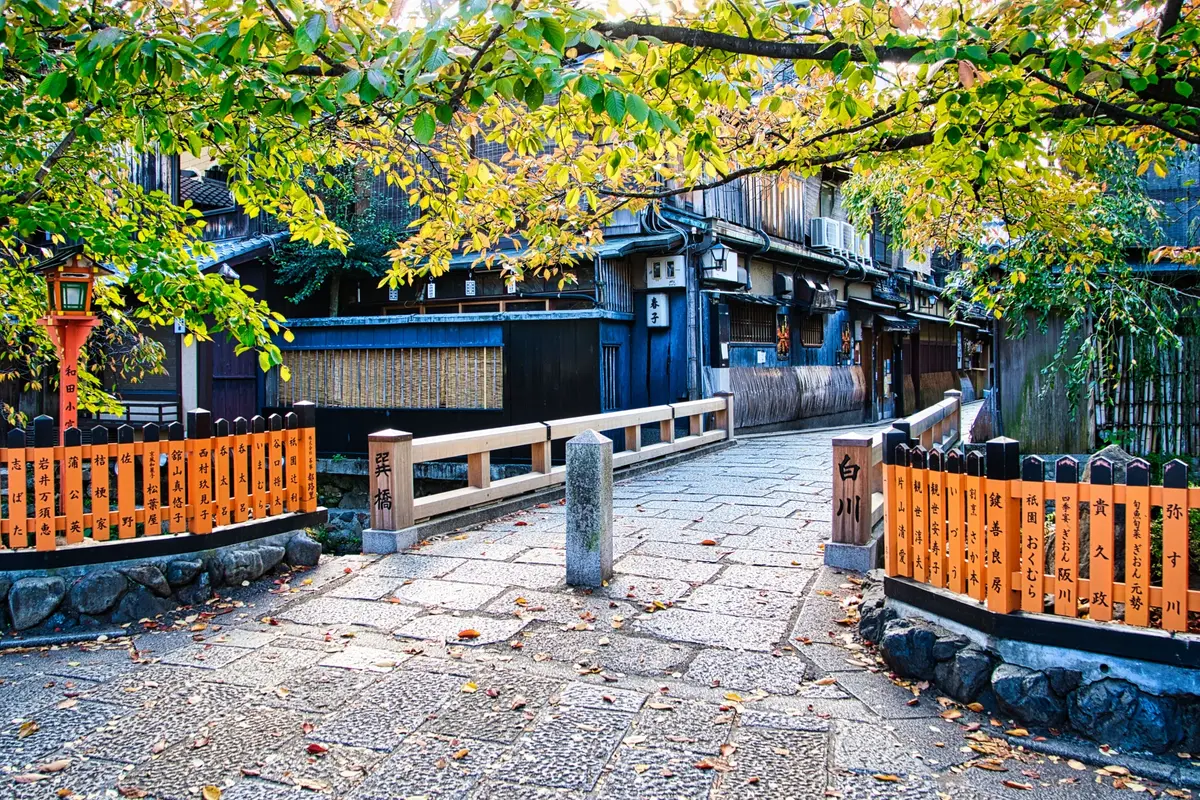
A stone-paved lane along the small Shirakawa stream, lined with cherry trees and old wooden townhouses. The area is a protected historic district.
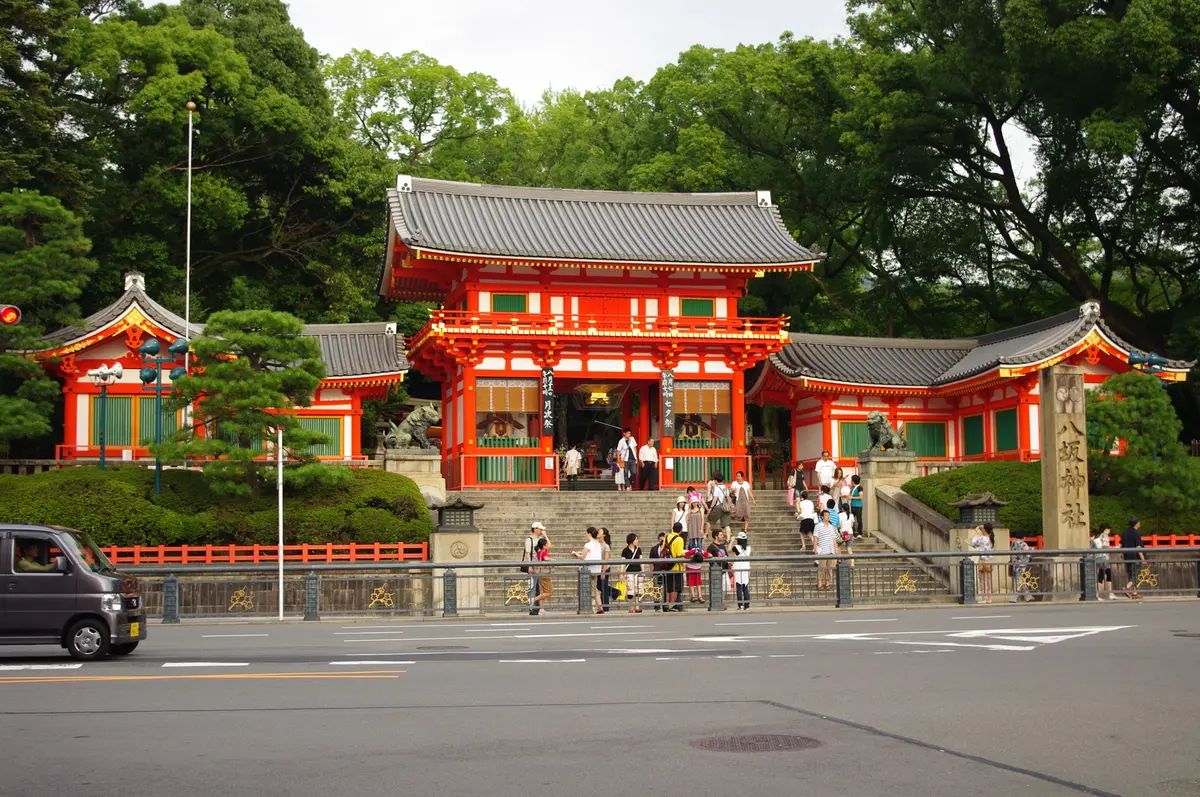
The shrine that gave Gion its name, known locally as Gion-san. The grounds are open 24 hours, so you can end your walk here even after dark.
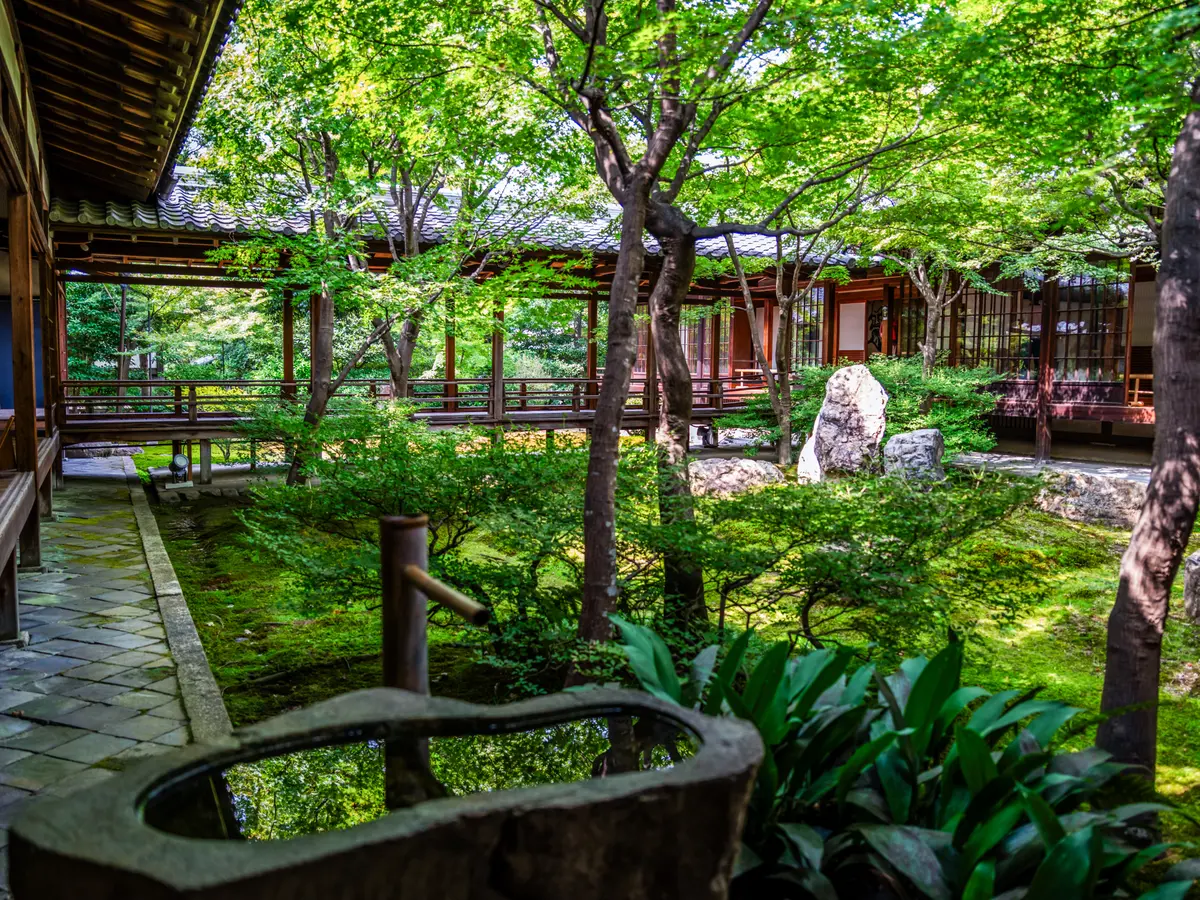
A Zen temple at the south end of Hanamikoji. Look up at the twin dragons painted on the ceiling of the Dharma hall, then look out over the raked-gravel garden. Photos are allowed of the gardens and artworks only.