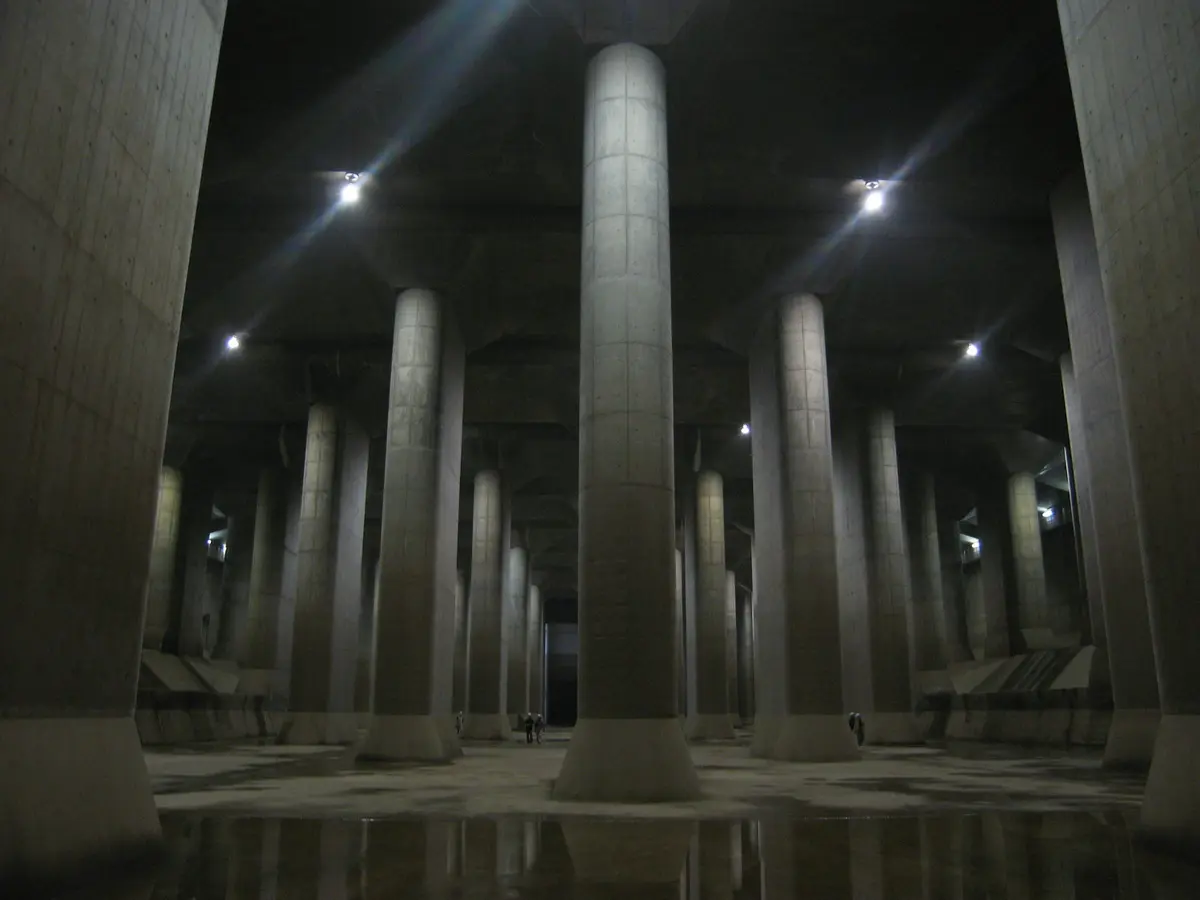
Walk among giant pillars deep underground
These are vast spaces under the ground: a flood-control tank held up by rows of giant pillars, and old quarries where stone was cut away and pillars of rock were left to hold up the roof. The air inside stays cool all year, so even in midsummer bring a light jacket.
Deep below the fields of Kasukabe in Saitama, this tank is part of a huge tunnel system that carries floodwater away from the suburbs north of Tokyo, and its rows of towering concrete pillars have earned it the nickname "underground temple." On a guided tour you walk down the stairs into the hall and stand among the pillars. Tours must be booked ahead and can be cancelled in heavy rain, so check before you go.
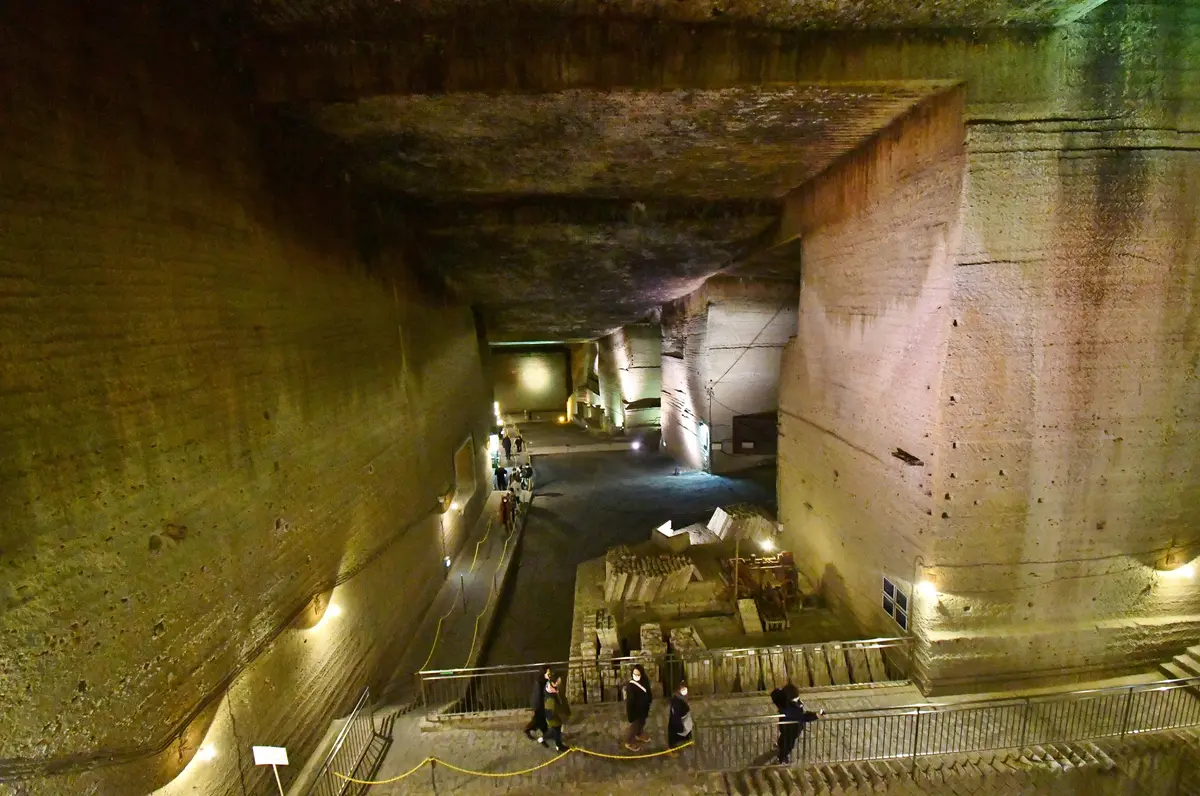
The soft volcanic rock dug out here, Oya stone, was used for buildings across Japan, including Frank Lloyd Wright's old Imperial Hotel in Tokyo. Today the dim cavern also hosts concerts, art shows and film shoots, and soft lighting picks out the cut walls. It is about 30 minutes by bus from Utsunomiya Station, which is under an hour from Tokyo by shinkansen.

On the rocky coast of Matsuzaki, on the Izu Peninsula, workers once cut Izu stone out of the cliff by hand, leaving pillars of rock to hold up the rooms they carved. A short, lit path winds through the dim, cool chambers. Entry is free, but it is far from the big cities, so it fits best into a trip around western Izu.