Warm sweets on the way to Tokyo's oldest temple
Ningyo-yaki are small sponge cakes filled with sweet bean paste, baked in Asakusa in the shapes of local symbols such as pigeons, lanterns and the five-story pagoda. Buy them warm from the iron molds, with fried manju buns, as you walk from the giant red lantern of Kaminarimon to Senso-ji. On crowded Nakamise, it is polite to eat at the shop rather than on the move.
Founded in 1868 and said to be the oldest ningyo-yaki shop in Asakusa. Its cakes come shaped as pigeons, lanterns, the thunder god and the five-story pagoda, and you can watch them being baked and buy them warm.
Fried manju, buns filled with sweet bean paste, are fried right in front of you on Nakamise, in flavors from plain bean paste to matcha and chestnut. Eat them while they are hot.
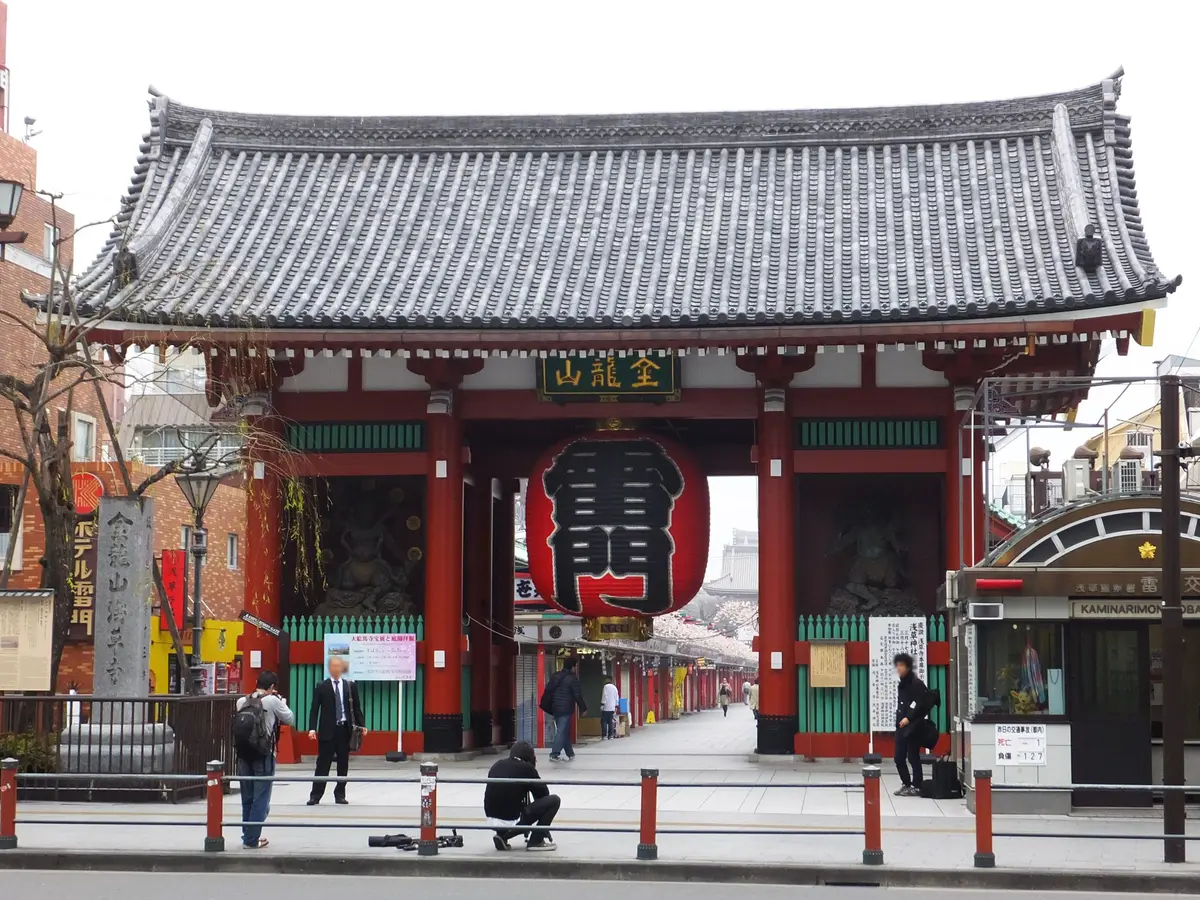
The outer gate of Senso-ji, hung with a red lantern 3.9 m tall and weighing about 700 kg, and flanked by statues of Fujin and Raijin, the gods of wind and thunder.
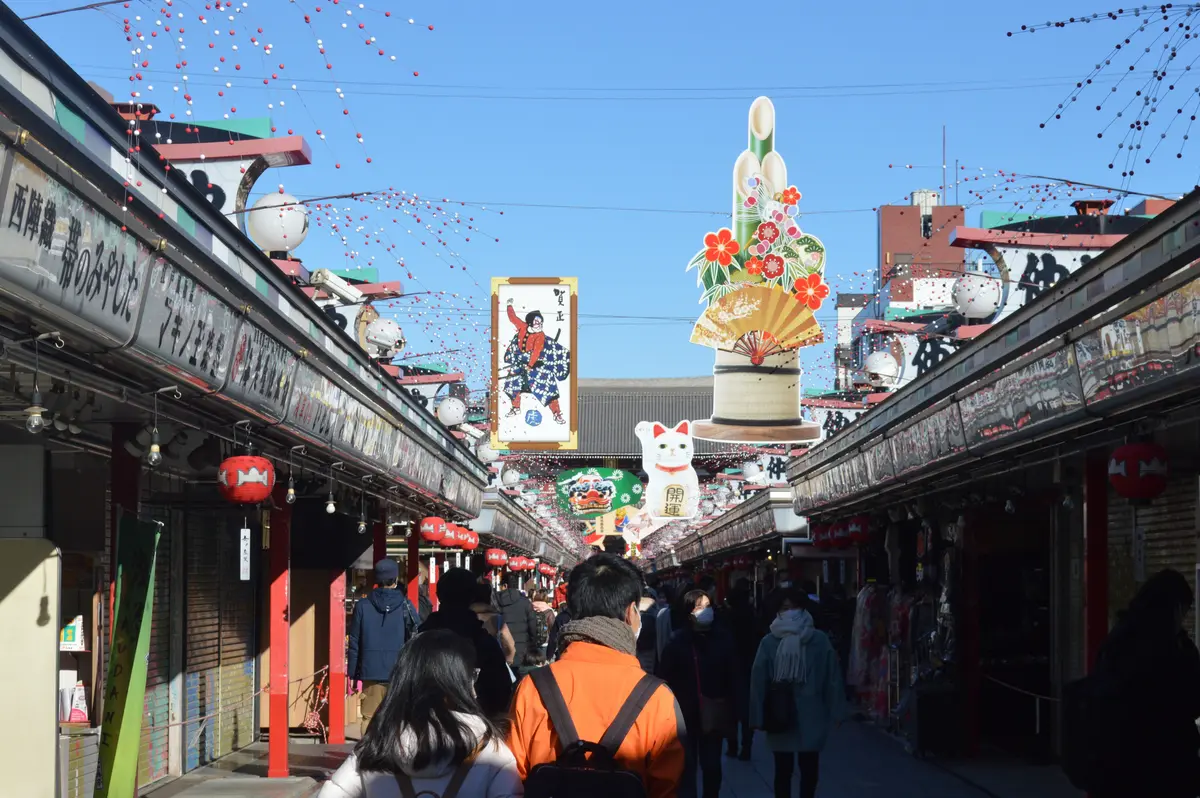
About 250 m of small shops from Kaminarimon to Hozomon, the inner gate, selling ningyo-yaki, fried manju and kaminari okoshi, crunchy puffed-rice sweets.
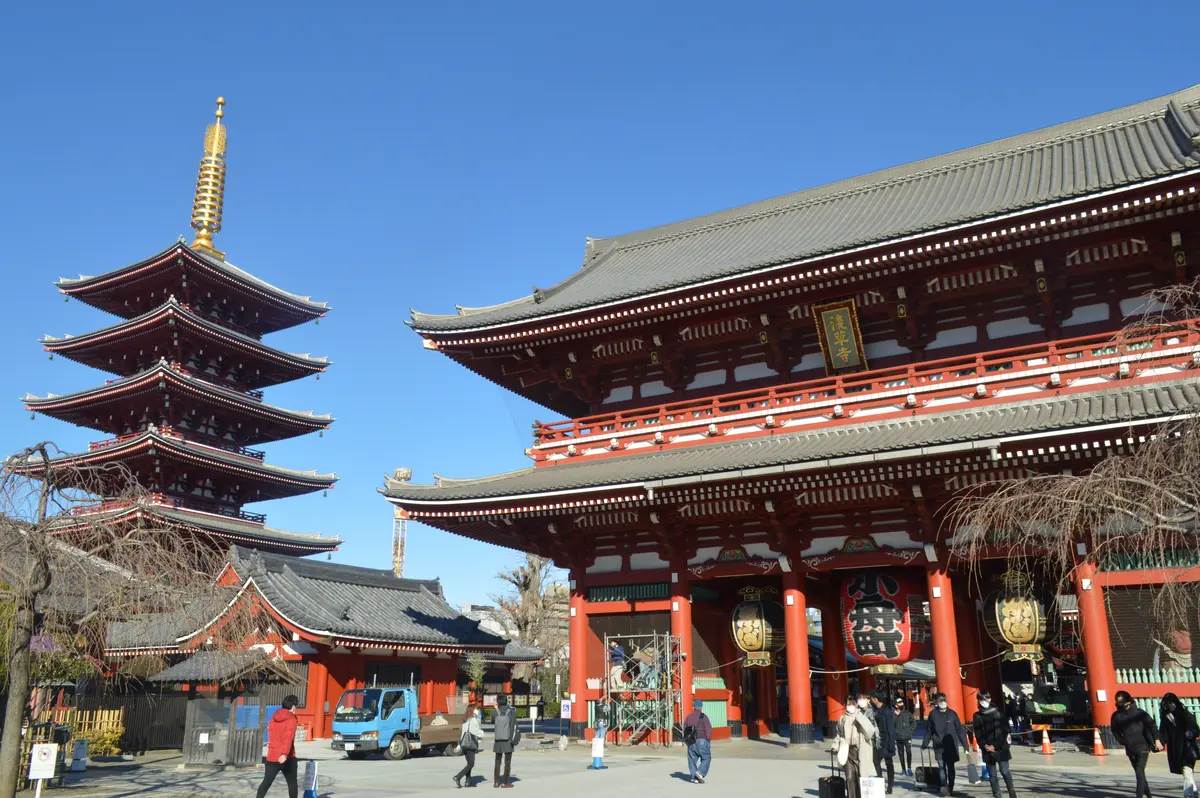
Tokyo's oldest temple, founded, the story goes, in 628 after two fishermen brothers pulled a small statue of Kannon from the river in their net. Before the main hall, people waft the smoke of the big incense burner over themselves, said to bring good health.