A castle town of sizzling bone-in chicken
Marugame, in Kagawa on the island of Shikoku, is in the heart of udon country, and it is also where honetsuki-dori was born in the 1950s: a whole chicken leg roasted on the bone and served sizzling on an iron plate. Climb the castle's towering stone walls, watch paper fans being made, then choose your chicken and eat it with your hands. It is about 40 minutes by train from Okayama, a stop on the shinkansen from Osaka.
The restaurant where honetsuki-dori began. Choose oyadori, older hen with a firm, chewy bite, or hinadori, young and tender chicken, and pull it apart while it is still hot on the iron plate. In the evening there is often a line, and the oyadori can sell out.
An izakaya, a casual Japanese pub, where locals come for honetsuki-dori seasoned differently from the original, with small home-style dishes such as kawasu, chicken skin dressed in vinegar. It opens only in the evening and is closed on Sundays and holidays.
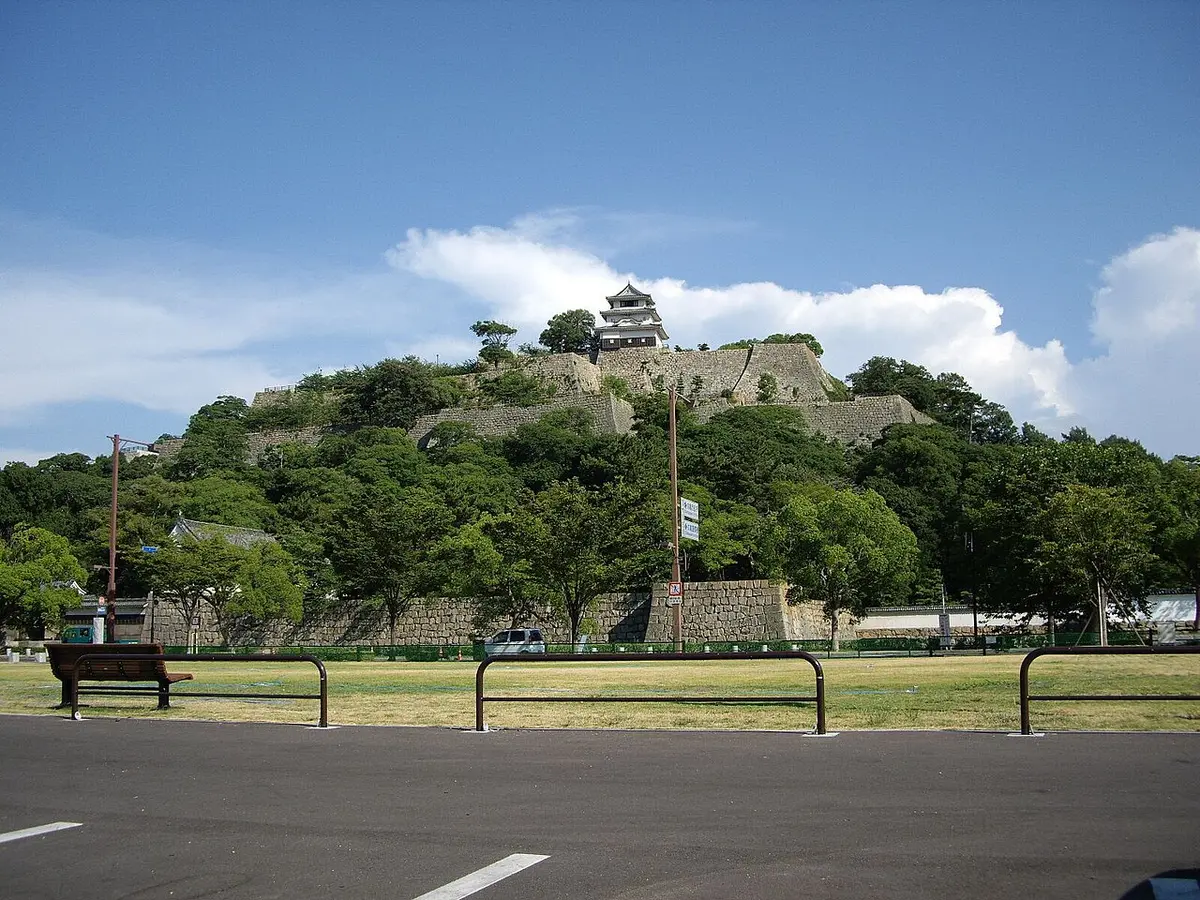
A castle whose stone walls curve outward like an open fan, rising in tiers from the moat to the keep, said to be the tallest castle walls in Japan. The small keep at the top is one of only twelve left in Japan from before the 1870s, and looks out over the town and the Seto Inland Sea. The walk up is steep.

Marugame makes most of Japan's uchiwa, flat round paper fans, and here you watch craftspeople build them from bamboo and washi, Japanese paper. You can also make your own by pasting paper onto a bamboo frame, if you book ahead. Entry is free, and it is closed on Wednesdays.

A garden made for the lords of Marugame, with a large pond, small islands and pine trees shaped over the years, laid out for a slow walk around the water; a small art museum stands in the grounds. It is next to the uchiwa museum, a short taxi ride from Marugame Station, and closed on Wednesdays.