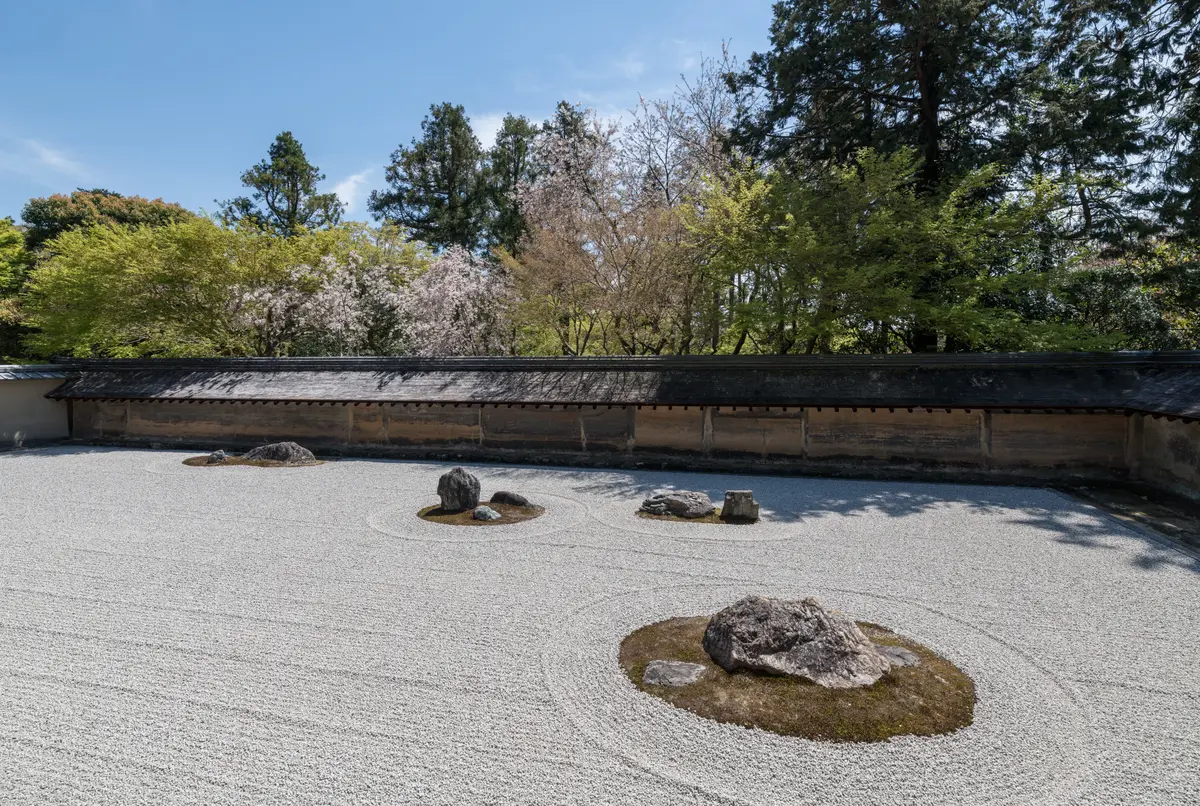
Visit Zen gardens of rock and raked gravel
Karesansui, or dry landscape gardens, use only rocks, gravel and moss to suggest mountains, rivers and the sea. Each Zen temple in Kyoto reads the stones its own way: a tigress carrying her cubs across a river, a checkerboard of moss. Take your time, and stay off the raked gravel.
Home to Japan's best-known rock garden: fifteen stones set in white gravel and nothing else. Look out from the hall's veranda and decide for yourself what they are.
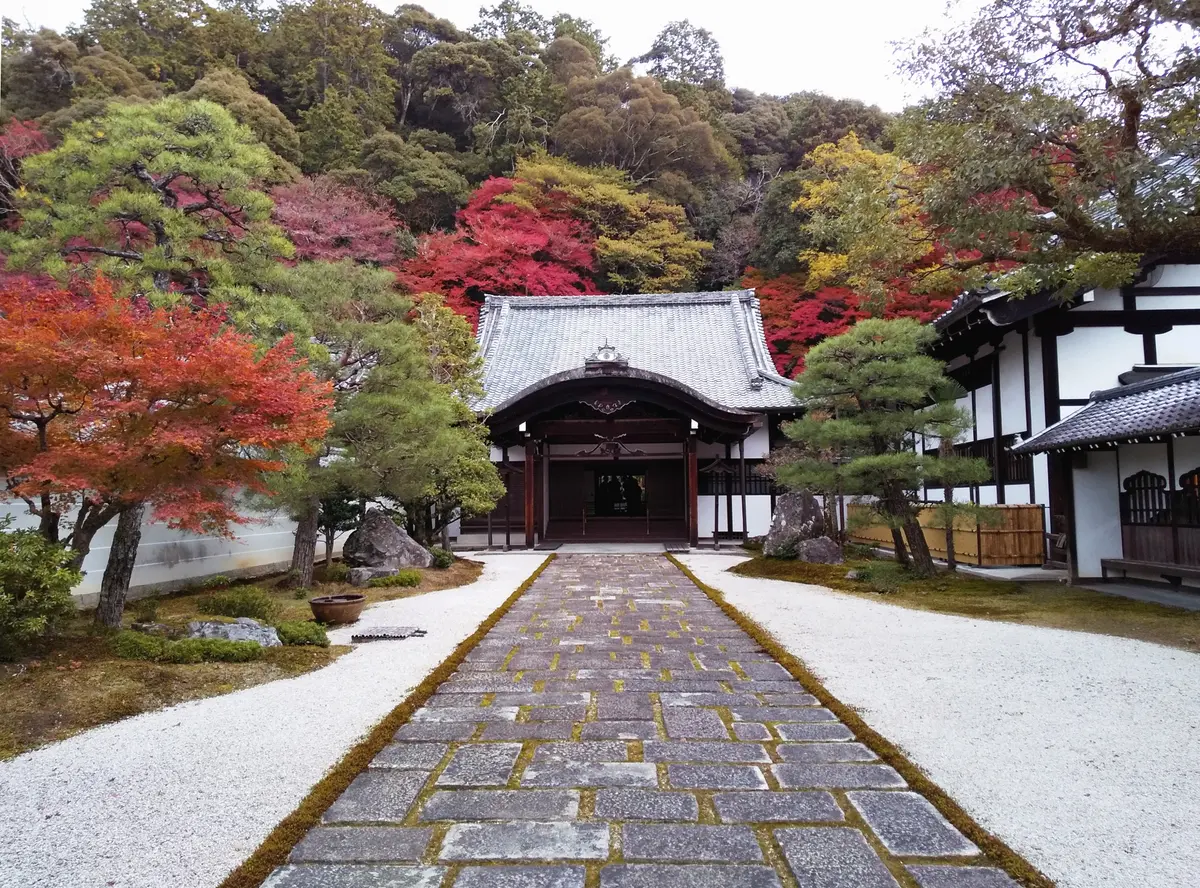
The abbot's hall faces a 17th-century dry garden attributed to the designer Kobori Enshu. Its rocks are read as a tigress carrying her cubs across a river, and it is a national Place of Scenic Beauty.
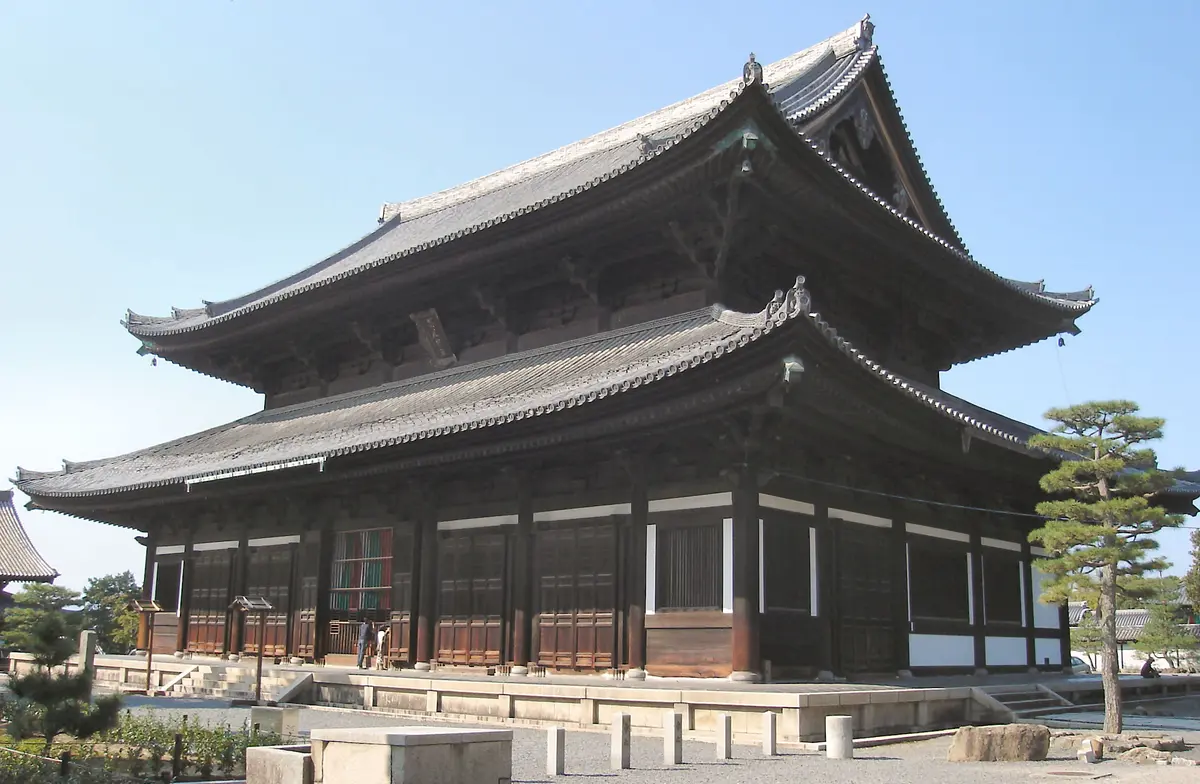
A temple with a different garden on each side of its abbot's hall. The north garden is a checkerboard of square stones and moss, a modern take on the old style.
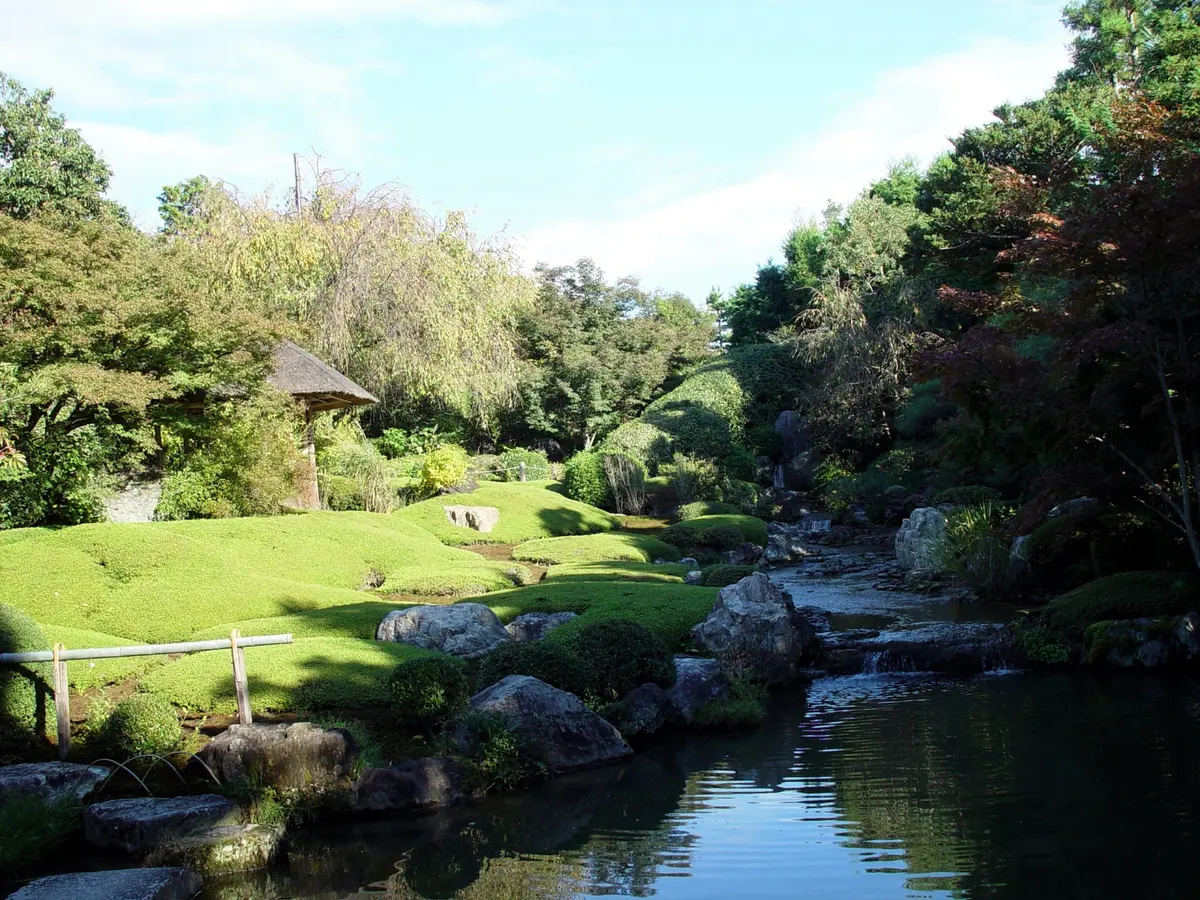
A sub-temple in the large Myoshinji complex, with a dry garden said to be the work of the 16th-century painter Kano Motonobu. It reads like an ink painting laid out in stone.