
Ride a cable car train up a steep mountain
In Japan, a cable car is a small train pulled up a steep track by a cable, climbing in about 10 minutes a slope that would take an hour on foot. Watch a town or a lake open up below the window, then visit a mountain temple or rest at a lookout at the top. Each one here starts near a regular train station, so you do not need a car.
The steepest cable car track in Japan, climbing partway up Mt. Takao in about six minutes, with the floor built in steps so you stand level as the car tilts. From the top station you look out over the Kanto plain, and Yakuoin temple is about a 10-minute walk away. Mt. Takao is about 50 minutes from Shinjuku on the Keio Line, and on busy autumn weekends the wait can be over an hour.
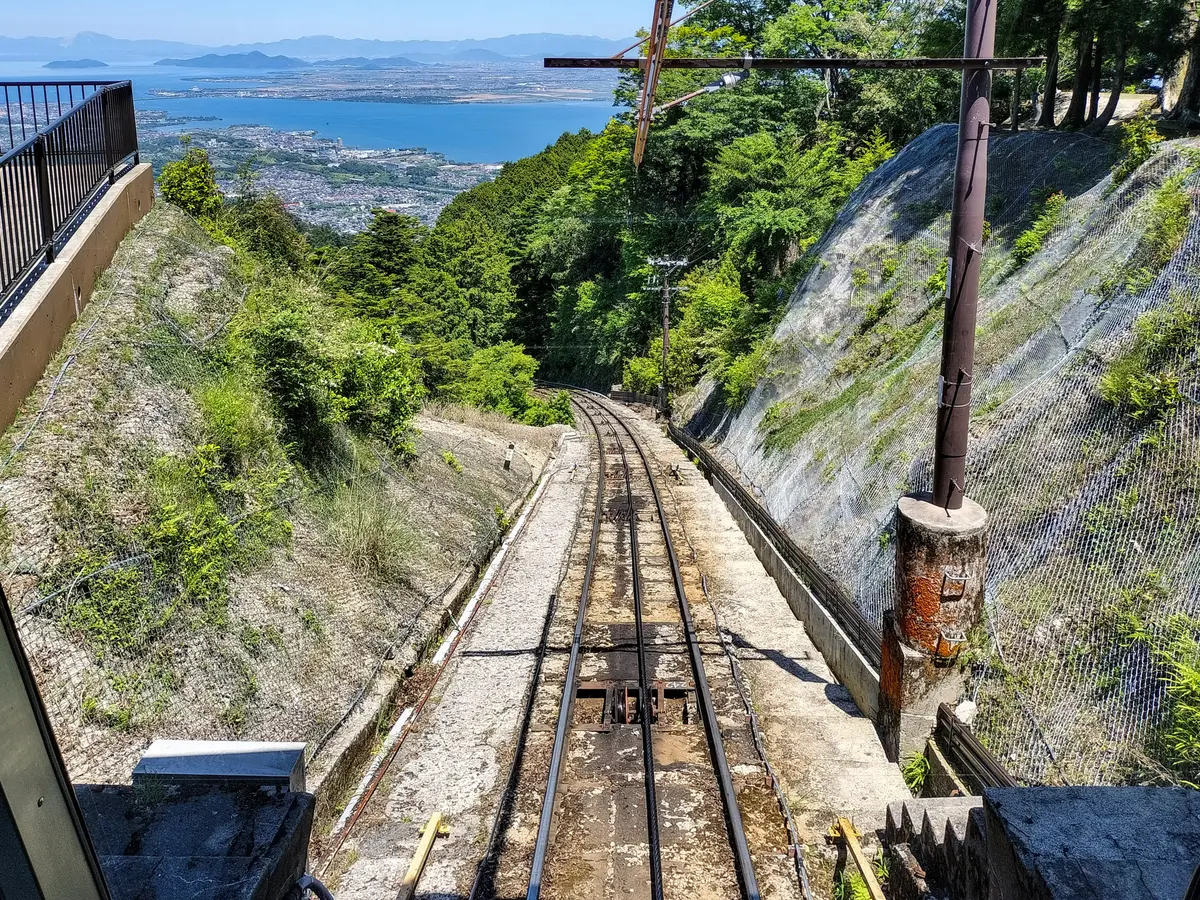
Japan's longest cable car, about 2 km, and for its 11 minutes Lake Biwa spreads wider and wider below the window. The top station is a wooden building from the 1920s with a terrace over the lake, and Enryaku-ji, the great temple complex on Mt. Hiei, is a walk away. It is on the Shiga side of Mt. Hiei, a short train ride from Kyoto, and the ticket office takes cards and IC cards.
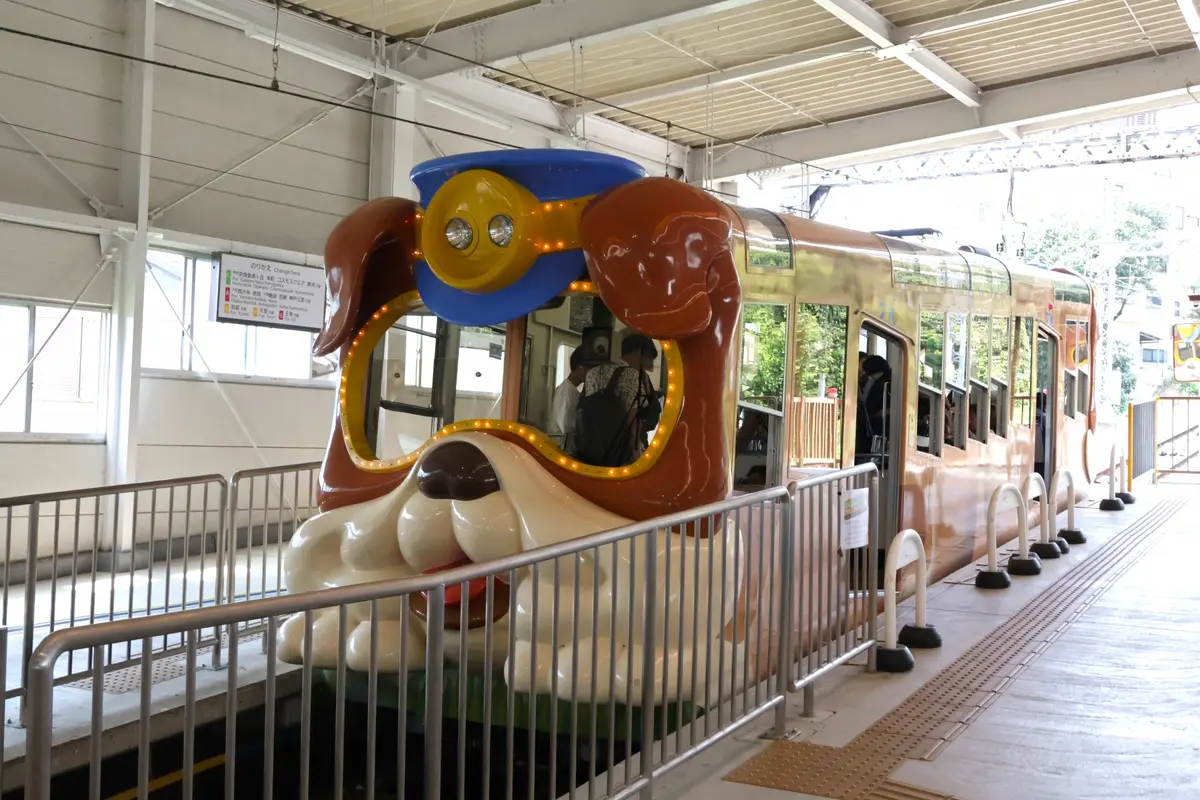
The starting point of the oldest cable car in Japan, where the cars are shaped and painted like a dog and a cat, so the ride feels like a page from a picture book. It climbs to Hozanji, a temple on the mountainside, and a second cable car continues to the summit, where a small old-fashioned amusement park stands. Ikoma is about 20 minutes from Osaka on the Kintetsu Line, and the amusement park closes from early December to March.
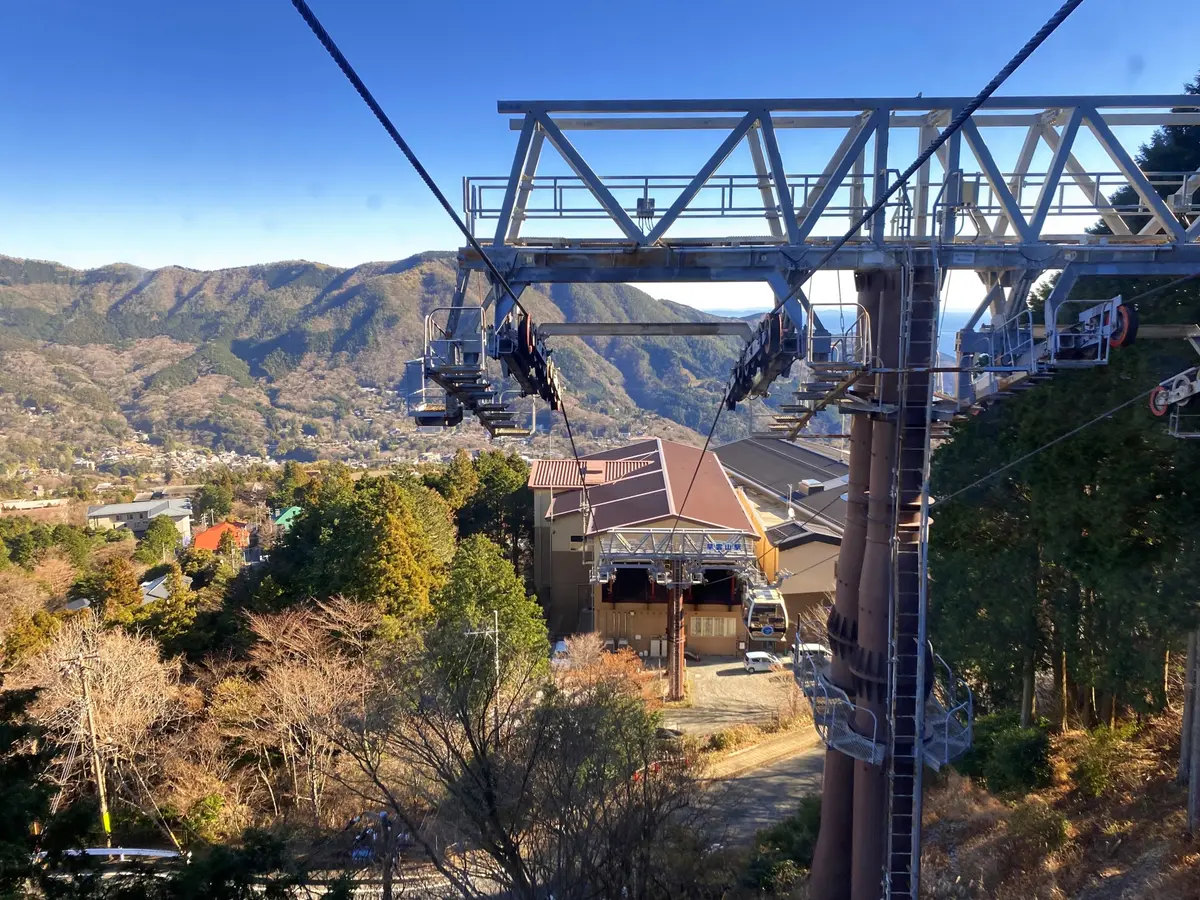
The top station of the Hakone Tozan Cable Car, which climbs from Gora in about 10 minutes through small stations built in steps on the slope. On the second floor there is a free foot bath, where you sit and soak your feet in hot spring water, and a terrace facing the mountains. From here a ropeway, a gondola lift, continues to Owakudani, a steaming volcanic valley, and the Hakone Free Pass covers both.